Best Crawl Space Dehumidifiers: 3 Models Compared
The best crawl space dehumidifier is the one that fits the space, removes enough moisture at the actual operating temperature, and drains reliably. Our shortlist compares the AprilAire E070, Santa Fe Compact70 and AlorAir Sentinel HD55S by those practical requirements. None replaces repairs to a plumbing leak, rainwater entry or a persistently flooded floor.
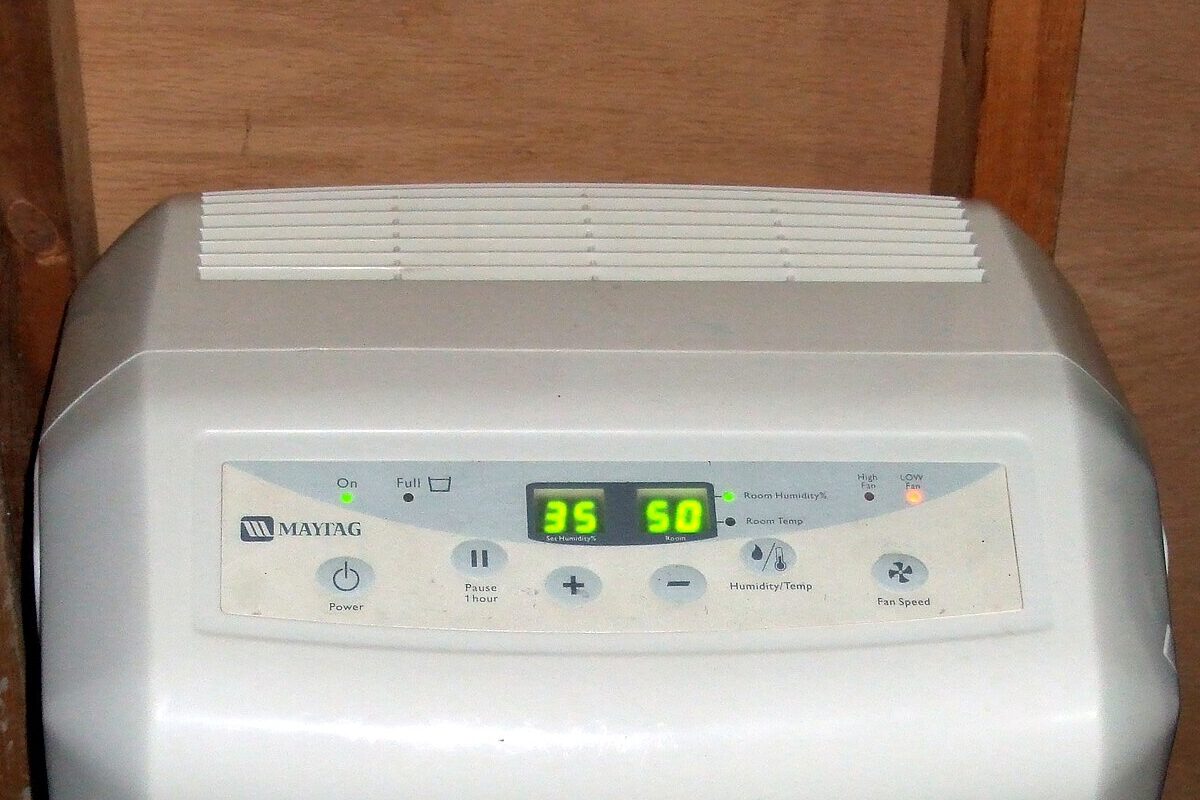
This is a research-based buying guide, not a hands-on product test. We reviewed manufacturer specifications and installation information; the credited third-party photograph illustrates residential appliance controls. Affiliate disclosure: Amazon links in this guide are affiliate links. As an Amazon Associate I earn from qualifying purchases. See our editorial standards for how we separate documentation from experience.
Start with the problem you need to solve
If you have standing water, investigate its source before ordering an appliance. If the floor is dry but humidity remains elevated, collect temperature and humidity readings away from the machine. Interpret those readings alongside visible water entry, operating temperature and the layout.
For a sealed crawl space with a confirmed need for dehumidification, use the comparison below to make a shortlist. A small access opening, a drain that sits above the machine, or a wall dividing the space may eliminate an otherwise suitable product. Resolve these constraints before comparing discounts.
| Model | Most useful reason to consider it | Important limitation | Before ordering |
|---|---|---|---|
| AprilAire E070 | Low rectangular cabinet and a professional installation/support route | Published coverage does not prove suitability for your moisture load | Measure the complete access path and obtain an installed quote |
| Santa Fe Compact70 | Compact form and documented options for drainage and ducting | Optional accessories and current refrigerant-version instructions matter | Match the exact manual and service clearance to the unit being sold |
| AlorAir Sentinel HD55S, standard white version | A compact gravity-drain option with published 55-pint capacity at 80°F/60% RH | A larger saturation figure is a different rating; similarly named versions have different features | Confirm the SKU, drain arrangement and warranty seller |
AprilAire E070: consider the whole installed package
AprilAire lists the E070 at 70 pints per day, with a cabinet measuring 12.5 inches high, 12.5 inches wide and 25 inches deep. The manufacturer’s listing includes drain tubing and leveling feet and recommends professional installation. Those details make it worth considering when you want one contractor to handle equipment selection, placement and commissioning.
The cabinet dimensions are only the starting point. Add the installed support height, tubing connection, air clearance and room to remove the filter. A crawl space opening wider than the cabinet may still be awkward if a turn, beam or pipe blocks the route. Ask the installer to identify the drainage destination and include it in the quote.
Best fit: a homeowner who values a documented installation and local service arrangement. Check carefully: a very short access hatch, a remote room separated by foundation walls, or a drain route that requires lift. The official E070 listing provides current product information and its professional purchasing route.
Santa Fe Compact70: check the manual for the exact version
The Compact70 is designed for crawl spaces and basements. Its installation manual describes gravity drainage and an optional condensate pump when water must be lifted. It also identifies filter access and airflow as installation requirements. These are valuable details when the machine has to operate in an awkward location rather than on an open basement floor.
One reason to read the manual before ordering is that a familiar model name can span different production versions. The current documentation includes refrigerant-related instructions. Match the manual, model label and installation requirements to the actual unit; do not borrow a clearance or service instruction from a different dehumidifier.
Best fit: a project where compact placement and a documented accessory arrangement are priorities. Check carefully: the complete delivered package, available local service and any extra pump or duct kit. Read the manufacturer’s Compact70 installation manual before agreeing to an installation plan.
AlorAir Sentinel HD55S: distinguish the rating and the variant
The standard white Sentinel HD55S listing gives a 55-pint capacity at 80°F and 60% relative humidity, alongside a larger saturation rating. Those figures describe different conditions. Using the saturation number as if it were directly comparable with another product’s cooler-temperature rating would distort the comparison.
AlorAir sells similarly named variants, including Wi-Fi products. Verify the exact version’s drainage, controls, dimensions and included accessories in writing. For a gravity-drain installation, the water needs a continuous route down to an approved outlet. A model name containing “crawl space” does not remove that requirement.
Best fit: a straightforward installation after the capacity, drain and service questions have been answered. Check carefully: seller authorization, what warranty costs are covered, and which shipping or diagnostic responsibilities remain with you. The manufacturer’s standard white HD55S page is the reference for this specific comparison.
Compare pint ratings on the same basis
Dehumidification capacity is conditional, not a promise that the machine will collect that quantity every day. ENERGY STAR explains that the revised portable-dehumidifier test uses 65°F instead of the older 80°F condition. A colder test can produce a lower published capacity for the same underlying equipment.
That is why a modern portable “50-pint” unit cannot automatically be ranked below an “old 70-pint” unit by the number alone. Ask for the temperature, relative humidity and applicable test procedure behind each rating. When those conditions differ, record them in separate columns instead of creating a misleading leaderboard. See ENERGY STAR’s explanation of testing and capacity.
Sizing must account for moisture load and layout as well as capacity. A square-foot coverage claim is useful screening information, but it cannot account for every opening, wet surface or divided compartment.
Drainage often decides which model works
Draw the proposed route from the drain connection to its destination. A gravity hose needs the slope and connection arrangement specified by the manufacturer. A hose that rises over a beam can create a problem even when the destination is lower overall. A pump adds lift capability, but it also adds a float, power supply and maintenance item.
Before paying, ask who will check the outlet, prevent accidental hose displacement, and test drainage through a complete operating cycle. Where overflow protection or a shutoff is part of the design, confirm that it actually stops the equipment as intended. Check the proposed location against airflow, service access and drainage.
Budget for ownership, not only the checkout price
The purchase price is only one line. Compare the machine, mounting or platform, drain materials, pump if required, electrical work, installation labor, filters and future service access. A cheaper unit that requires a difficult extra installation step may not produce the cheapest completed project.
Compare equipment, drainage, electrical work and labor before comparing a delivered unit with a contractor’s installed offer. Ask both sellers what happens if the machine fails: who diagnoses it, who removes it, who pays freight, and whether local labor is included. A long limited warranty is useful only when you understand those terms.
A short purchase checklist
- Record the crawl space layout, operating temperature and humidity history.
- Confirm that water-entry and ground-moisture problems are being addressed.
- Match capacity ratings to comparable test conditions.
- Measure the access route and the installed service envelope.
- Confirm the exact SKU, drainage accessories, seller and warranty terms.
- Request a commissioning check and retain the manual and receipt.
Common questions
Can I use a regular basement dehumidifier?
Possibly, if its manual allows the conditions and installation you have. Check temperature limits, drainage, support and filter access. An upright appliance that works well on an open basement floor can be impractical in a low, inaccessible crawl space. Product category names alone do not settle suitability.
Should I get the largest unit I can afford?
Choose a capacity supported by the assessed load and the manufacturer’s sizing guidance. Buying extra capacity does not repair ongoing water entry or make air move through a blocked compartment. First determine whether the project needs one appliance, a different air path, or building repairs.
What should happen after installation?
The installer should verify drainage and controls, explain filter maintenance and record initial conditions. An independent humidity monitor can show how the space behaves away from the machine. Review the trend after weather changes rather than judging success from one reading beside the outlet.