Best Sump Pump Battery Backup: Compare 3 Systems
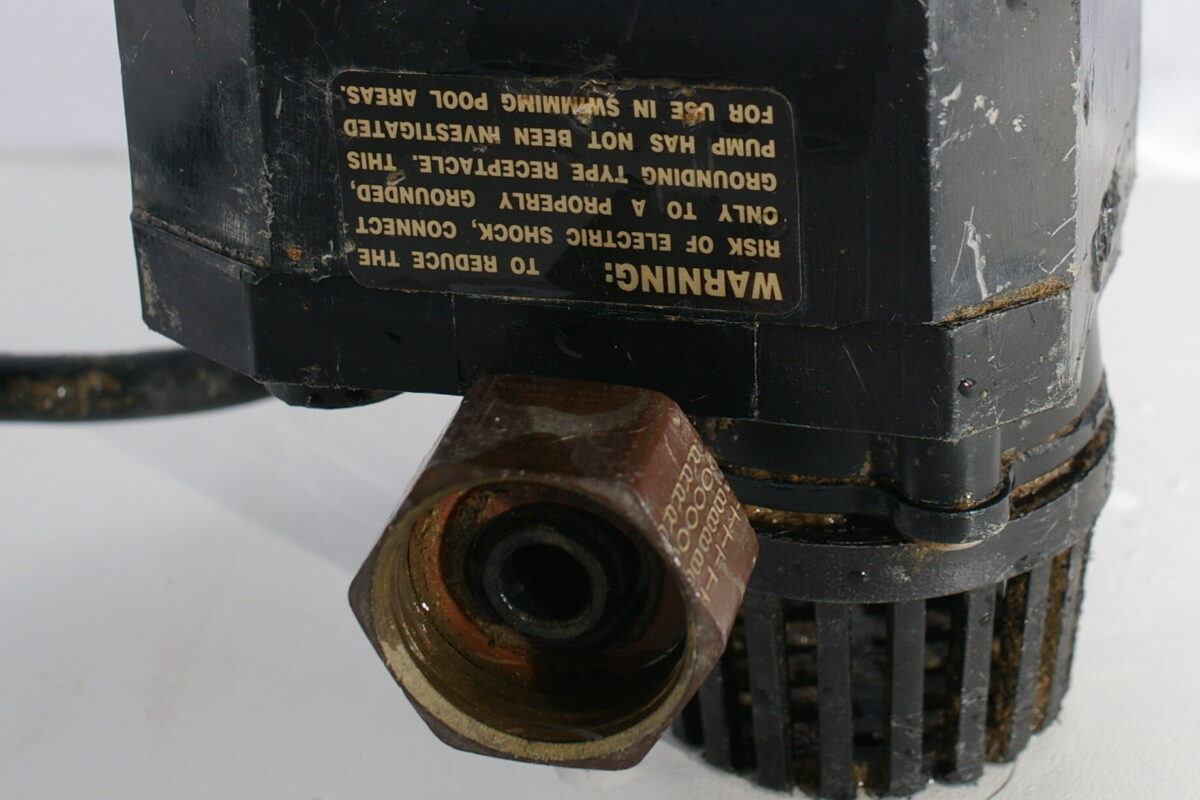
An older AC primary pump illustrates existing hardware to assess before a backup retrofit; the compared battery-backup packages are not pictured. Photo: Hustvedt / Wikimedia Commons, CC BY-SA 3.0. Cropped/resized by CrawlSpaceInsight.
The best sump pump battery backup is a system that can handle the required water flow at your actual lift, fit the basin and use a compatible battery and charger. Decide first whether you are adding protection to a working primary pump or replacing the full pump arrangement. An attractive gallons-per-hour headline does not establish either fit or outage duration.
This research-based guide compares the Basement Watchdog Special CONNECT BWSP, Zoeller Aquanot Fit 508 and an Aquanot Fit 508 ProPak with M98 primary pump. The ProPak is a combined installation package, not a third independent backup-pump design. We have not performed hands-on pump or battery-runtime tests. Affiliate disclosure: Amazon links in this guide are affiliate links. As an Amazon Associate I earn from qualifying purchases.
Make sure water can reach the basin
A backup pump does not create a drainage system. If water appears after storms but stays isolated under the crawl space floor, begin by investigating the water-entry path and checking for water beneath the liner. A pump can only handle the water delivered to its basin and discharged through a suitable outlet.
Ask an installer to inspect the primary pump, basin dimensions, float clearances, discharge route and valves. The backup plan should address a defined failure scenario—loss of mains power, primary-pump trouble or another documented need. It should not be presented as flood insurance or a guarantee against every type of water entry.
Compare the project type before comparing brands
| Option | Project it addresses | Documented feature to check | Main buying question |
|---|---|---|---|
| Basement Watchdog Special CONNECT BWSP | Retrofit backup beside a suitable existing primary pump | Manufacturer lists 1,850 GPH at 10-foot lift and an optional separate Wi-Fi module | Does its performance and installed layout suit your measured requirement? |
| Zoeller Aquanot Fit 508 | A dedicated battery backup arranged with a primary sump pump | Manufacturer provides model-specific controller, installation and performance resources | Which exact kit, battery and curve are included in the offer? |
| Aquanot Fit 508 ProPak with M98 | Combined primary-and-backup replacement project | Package includes an M98 primary pump and 508 backup components | Is replacing the full arrangement justified and will the assembled package fit? |
Basement Watchdog Special CONNECT: a retrofit candidate
The manufacturer’s BWSP page lists 2,600 GPH at zero lift and 1,850 GPH at a 10-foot lift. The difference illustrates why the zero-head number alone is not a sizing answer. Use the relevant curve and account for the actual discharge arrangement.
Retail listings for BWSP can show different performance figures. This guide uses the manufacturer’s published curve rather than a retailer’s headline number. Before ordering, confirm the exact pump revision, its documented performance at your installation’s lift and the compatible battery with the seller.
The page also describes controller monitoring and an optional Wi-Fi module sold separately. If remote notification is a reason for choosing it, include the module and the rest of the connection requirements in the quote. Confirm the exact compatible battery and current controller version rather than borrowing instructions from an older similarly named system.
Consider it when the existing primary pump and basin are suitable for an additional system and the documented performance meets the assessed need. Question the offer if the installer has not checked float movement, physical fit or the battery package.
Zoeller Aquanot Fit 508: check the complete kit
Zoeller describes the Aquanot Fit 508 as a battery backup intended to work with a primary pump. Its Aquanot resource center supplies model-specific technical and installation material.
Use those documents and the exact seller quote to establish what is included: backup pump, controller/charger, switches, valves, battery box and any accessories. A battery box in the photograph does not prove the battery itself is included. Confirm the battery specification, whether the seller supplies it and any separate warranty terms.
This is a candidate for a professionally planned retrofit when the basin and discharge arrangement can accommodate it. Avoid treating a general product-family specification as the final curve for every package or revision.
Aquanot Fit 508 ProPak with M98: a different scope
The ProPak with M98 includes a primary pump with a preassembled backup arrangement and associated components. That can be relevant when the project already justifies replacing the primary pump, not merely adding a battery beside a sound installation.
Compare the combined installed price with the retrofit alternatives on a like-for-like basis. Ask about basin access, dimensions, the battery purchase and future service. The package’s preassembly does not establish that it fits every pit or that its discharge requirements are already satisfied.
Understand lift, flow and the performance curve
The pump works against the discharge system, not an open bucket at its own outlet. Vertical lift, piping and fittings influence the operating requirement. An installer should explain the expected water inflow and the relevant duty point rather than choosing from the biggest printed GPH figure.
For example, a hypothetical site requiring 1,200 gallons per hour at its assessed lift needs comparison with performance at that condition. A zero-lift figure of 2,600 GPH does not prove suitability by itself. This is an illustration of the decision process, not a recommendation for a particular site or pump.
Battery capacity is only part of runtime
Actual outage duration depends on battery condition, compatible capacity, charging state, pump duty and water inflow. A claim of “days of backup” may assume intermittent operation. It should not be read as continuous pumping for the same period.
Ask for the manufacturer’s runtime assumptions and match them to the proposed battery. Confirm the chemistry and battery arrangement permitted by the controller. Do not substitute a lithium battery or add a second battery simply because its voltage or marketing capacity looks suitable; compatibility includes charging and protection requirements.
A useful quote separates the pump package, approved battery, additional modules, installation and replacement-battery expectations. Review warranty and maintenance obligations for each component rather than assuming the pump warranty covers the entire system identically.
Remote alerts need their own outage plan
An audible local alarm and an off-site notification are different functions. Internet alerts can depend on a module, gateway, router, internet service and app settings. A battery-powered pump does not keep every part of that chain operating during a power failure.
If remote monitoring matters, ask how the installation will be tested for loss of power and loss of connectivity. Our humidity-monitor guide discusses the same distinction between a local sensor and an internet alert path, although humidity monitoring and sump alarms perform different jobs.
Installation and testing belong in the purchase
Use the exact manufacturer’s instructions and a competent installer for the electrical and plumbing work. The primary and backup floats need unobstructed movement; the basin and discharge arrangement need a coherent design. A covered or soil-gas-controlled sump also needs its sealing details preserved.
Ask the installer to demonstrate the prescribed test procedure safely, document normal indicators and explain which alarms require attention. Do not reach into a live pit or improvise a power-failure test around standing water. Retain the manuals, model numbers, battery details and service contact.
If the project also includes drainage or enclosure work, compare it with the complete crawl space scope checklist. Keep the pump protection separate from post-event material cleanup and from ongoing air dehumidification, which addresses a different moisture problem.
Before buying
- Verify the water-collection and approved discharge routes.
- Compare performance at the assessed lift and flow requirement.
- Confirm physical fit, float clearance and the exact system version.
- Price the compatible battery, modules and complete installation.
- Review runtime assumptions, maintenance and replacement responsibilities.
- Obtain a safe testing demonstration and a documented handover.
Can a water-powered backup replace a battery system?
It is a different design with water-supply, pressure, backflow-protection and local-approval considerations. It may be unsuitable where water availability depends on a well pump that loses power. Have a qualified installer compare the options for your actual supply and drainage conditions.
Does the backup mean I can ignore the primary pump?
No. The backup adds a defined layer of protection; it does not remove the need to maintain the primary pump, valves, floats, battery, basin and outlet. Follow the system’s prescribed inspection and test routine and investigate repeated backup operation.